
Cheesy Ham Chowder Recipe
posted on
January 23, 2023
In my humble opinion, a ham hock is one of the most under-utilized meat cuts there is...at least, I never knew how delicious and easy to prepare they were! You get the flavor of ham and the tender, moist texture of cuts like a well-marbled chuck roast or a chicken thigh.
Here's how:
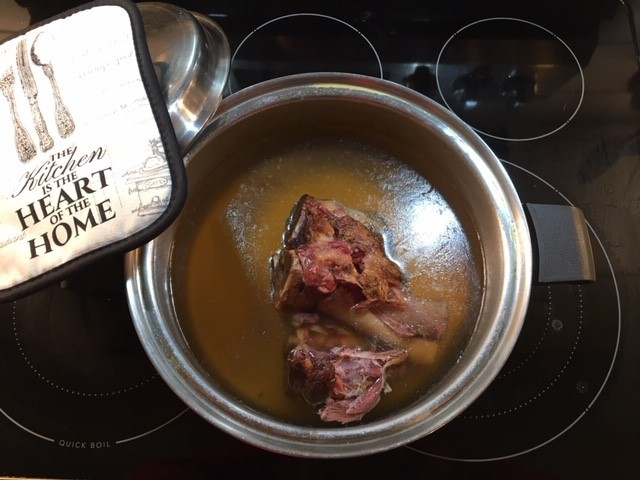
Place the thawed ham hock in a Dutch oven, stock pot, or any baking dish with a lid. Add a couple inches of water to the pot, cover and bake at 275 for about 5-6 hours. The meat will be falling off the bone.
Remove it to a plate or platter and allow to cool until you can handle it. Then simply separate out the bones and fat. It's not difficult as the meat will be very soft. The plate on the left is the meat, and the one on the right is bones and fat.

You can now dice or shred the meat (it shreds easily with your fingers) and use it for your favorite ham soup, salad, or casserole.
Cheesy Ham Chowder
In a 3-4 quart pot, place 4-5 medium potatoes, peeled (if desired) and diced. Add enough of the broth (from cooking the ham hock) to almost cover the potatoes. Bring to a boil and cook until the potatoes are soft. I also like to add a little diced onion here...or you could use a bit of onion powder. (As an alternative, you could use rice instead of potatoes. Cook one cup of rice in 2 cups of broth, using the directions on your rice package.)

Reduce the heat to low, and add about 3 cups of milk, and approximately 2 cups each of the ham and some shredded Colby or cheddar cheese. You can adjust the amounts of milk, ham, and cheese, depending on how thick, meaty, or cheesy you like it. There shouldn't be a need for more salt, but you can add in any other seasonings you like, such as parsley, basil, sage, etc.

Heat on low, stirring every few minutes, until the cheese melts. It's ready to serve!


